Best AI Tools

Best AI Tools for Digital Marketers

Artificial intelligence is transforming digital marketing by helping professionals create content, improve SEO, analyze data, design visuals, and automate marketing campaigns by using the best AI Tools.

Whether you are a beginner, blogger, freelancer, social media manager, or business owner, the right AI tools can save time, improve productivity, and help you make better marketing decisions.

In this guide, we’ll explore the best AI tools for digital marketers in 2026, their key features, and how to use them effectively.
Best AI Tools


Best AI Tools at a Glance http://www.google.com

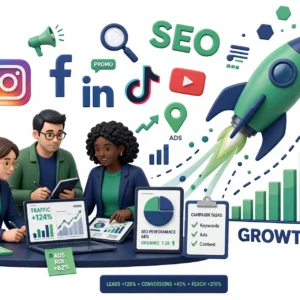
1. ChatGPT — Best for All-in-One Marketing

Create blog outlines, brainstorm campaign ideas, write social media captions, research topics, and analyze marketing data.

2. Jasper — Best for Marketing Copy

Generate marketing copy, campaign messaging, product descriptions, and brand-consistent content.

3. Semrush — Best for SEO Research

Research keywords, audit websites, analyze competitors, and identify opportunities to improve search visibility.

4. Canva — Best for Visual Content

Design social media posts, advertisements, presentations, thumbnails, and marketing materials with AI-assisted features.

5. Grammarly — Best for Editing

Improve grammar, clarity, tone, readability, and professionalism in emails, articles, and marketing copy.

Which AI Tools Are Best for Beginners?

If you are just starting, you don’t need to subscribe to every tool. Begin with a small toolkit and add specialist software as your work grows. https://varsha.mceiclass.org/

Your goal Recommended tool
Write blog posts ChatGPT
Research topics Gemini or Perplexity
Find keywords Semrush or Ahrefs
Design social media posts Canva
Improve writing quality Grammarly
Schedule social posts Buffer
Create AI images Adobe Firefly
Manage leads and campaigns HubSpot

Best Practices When Using AI for Digital Marketing

  • Fact-check everything: AI can generate inaccurate claims, statistics, or sources.

  • Keep content original: Add expertise, real examples, and useful insights rather than publishing generic AI output.

  • Protect customer information: Avoid entering confidential customer or business data into tools without appropriate safeguards.

  • Measure business results: Evaluate leads, sales, engagement, and conversions instead of relying only on output volume.

  • Choose tools carefully: Start with free or existing tools before paying for overlapping features.

Final recommendation

For most beginners, a practical starting combination is ChatGPT + Canva + Google Search Console + Google Analytics. Add Semrush or Ahrefs when you need more advanced SEO research, and consider HubSpot when lead management and automation become important.

For a digital marketing blog, ChatGPT, a keyword research tool, and Canva are a particularly useful starting point.

keyword research

Keyword Research: A Step-by-Step Guide

Keyword research is one of the most important parts of Search Engine Optimization (SEO). It helps you understand what people search for on Google, which topics interest your target audience, and how to create content that attracts relevant website visitors.

Whether you run a blog, an online store, or a business website, it can help you reach the right audience and improve your search engine visibility.


What Is Keyword Research? http://www.google.com

It is the process of finding and analyzing the words and phrases people enter into search engines when looking for information, products, or services.

For example, someone planning to learn digital marketing might search for:

  • What is digital marketing?

  • Digital marketing course for beginners

  • Best digital marketing tools

  • How to learn SEO

  • Digital marketing jobs in India

These are keywords you could use to plan useful website content.


keyword research

Why Is Keyword Research Important?

This helps you https://varsha.mceiclass.org/

  • Understand your audience: Discover what your potential readers and customers want to know.

  • Improve SEO rankings: Target relevant search queries with useful, well-optimized content.

  • Attract organic traffic: Reach people who are actively searching for your topic.

  • Find content ideas: Identify questions, problems, and related topics to cover.

  • Understand search intent: Create content that matches what users expect to find.

  • Discover business opportunities: Find relevant searches that may lead to enquiries, sales, or subscriptions.

    Best Keyword Research Tools

    Tool Best use
    Google Keyword Planner Keyword ideas and advertising estimates
    Google Trends Comparing interest over time
    Google Search Console Understanding existing search performance
    Ahrefs Keyword research and competitor analysis
    Semrush Keyword discovery and SEO analysis
    Google autocomplete Discovering related search phrases

    Practical Example: Digital Marketing Blog

    Suppose you want to publish an article about SEO for beginners. Here’s how you could organize your initial keyword ideas.

    Keyword Intent Suggested content
    What is SEO? Informational Beginner’s SEO guide
    SEO tips for beginners Informational Practical SEO tips
    Guide Informational Step-by-step tutorial
    Best SEO tools Commercial SEO tools comparison
    SEO course online Commercial Course comparison or review

    Final Thoughts

    It is not simply about finding popular search terms. It’s about understanding your audience, identifying relevant search opportunities, and creating content that genuinely answers people’s questions.

    Start with a clear topic, explore keyword ideas, evaluate search intent and competition, and use your findings to build a useful content strategy. Over time, review your results and refine your approach.

Artificial Intelligence

How AI Is Changing Digital Marketing: A Complete Guide

Artificial Intelligence (AI) is transforming digital marketing by helping businesses understand customers, create content, automate repetitive tasks, and improve advertising campaigns. From AI-powered chatbots to personalized product recommendations, businesses are using AI to deliver more relevant experiences and make faster, data-informed decisions. http://www.google.com

In 2026, AI is an increasingly important part of digital marketing. However, successful marketing still depends on understanding customer needs, creating trustworthy content, and using technology responsibly.


Artificial Intelligence


1. What Is Artificial Intelligence in Digital Marketing?

AI in digital marketing refers to the use of artificial intelligence technologies to analyze data, generate content, understand customer behavior, automate tasks, and optimize marketing activities.

AI tools can process large amounts of information and identify patterns that help marketers make informed decisions.

Examples of AI in digital marketing include:

  • Generating blog outlines, social media captions, and email drafts.

  • Analyzing customer behavior and marketing performance.

  • Personalizing website experiences and product recommendations.

  • Answering customer questions through chatbots.

  • Optimizing digital advertising campaigns.

  • Predicting customer interests and potential purchasing behavior.

AI does not replace every marketing task. Instead, it can support marketers by handling repetitive work and providing insights, while humans contribute strategy, creativity, judgment, and relationship building.

2. How Artificial Intelligence Is Changing Digital Marketing


A. AI-Powered Content Creation

AI tools help marketers brainstorm topics, create outlines, draft articles, write social media captions, and develop email campaigns.

For example, a digital marketer can use an AI tool to generate ten blog ideas about SEO in minutes and then research and develop the most useful idea into a complete article.

Benefits:

  • Speeds up brainstorming and drafting.

  • Helps generate ideas for multiple platforms.

  • Supports content repurposing.

  • Makes it easier to create initial drafts.

Important: AI-generated content should be reviewed for accuracy, originality, relevance, and quality. Publishing large amounts of generic content without adding value may not help readers or search performance.

B. Personalized Marketing Experiences in Artificial Intelligence

AI can help businesses tailor marketing messages, product recommendations, and website experiences to customer interests and behavior.

For example, an online clothing store might recommend products based on a shopper’s browsing activity or previous purchases, where appropriate data and consent are available.

Benefits include:

  • More relevant recommendations.

  • Improved customer engagement.

  • Better-targeted campaigns.

  • Potentially higher conversion rates.

Personalization should respect customer privacy and comply with applicable data protection requirements.


Traditional Digital Marketing vs. AI-Powered Digital Marketing

https://varsha.mceiclass.org/


Feature Traditional Digital Marketing AI-Powered Digital Marketing
Content creation Mostly manual drafting AI-assisted brainstorming and drafting
Data analysis Manual reports and analysis Automated analysis and pattern detection
Personalization Often based on broad segments Can adapt to individual behavior
Advertising More manual campaign management AI-assisted bidding and optimization
Customer support Primarily human-operated Chatbots plus human support
Decision-making Human analysis of available data AI-generated insights reviewed by people
Main limitation Can require significant manual effort Can produce errors, bias, or misleading insights

AI-powered marketing is not entirely separate from traditional digital marketing. It builds on many existing methods and adds new capabilities.

Conclusion

Artificial intelligence is changing digital marketing by making content creation, customer personalization, advertising, data analysis, and marketing automation more efficient.

AI tools can help businesses save time, explore new ideas, and improve campaign decisions. However, they also introduce challenges involving accuracy, privacy, originality, and overautomation.

The key to successful AI-powered digital marketing is balance: use AI to support repetitive work and generate insights, while keeping human creativity, strategic thinking, and customer trust at the center of every campaign.

Frequently Asked Questions (FAQs)

1. How is Artificial Intelligence changing digital marketing?

AI is helping marketers create content, personalize customer experiences, analyze data, automate advertising tasks, and improve customer support.

2. Will AI replace digital marketers?

AI may automate some tasks, but businesses still need people for strategy, creativity, relationship building, quality control, and ethical decision-making.

3. Which AI tools are useful for digital marketing beginners?

ChatGPT, Google Gemini, Canva, and selected AI features in marketing platforms can help beginners with writing, research, design, and campaign planning.

4. Can AI improve SEO?

AI can assist with keyword research, content planning, readability, and performance analysis. It cannot guarantee rankings, and useful, original content remains important.

5. Is AI marketing suitable for small businesses?

Yes. Small businesses can use AI to brainstorm content, prepare marketing drafts, answer common customer questions, and analyze campaign results. They should start with a clear goal and review outputs carefully.

SEO strategies

SEO Strategies to Rank Higher on Google: A Complete Guide

Search Engine Optimization (SEO) is one of the most effective ways to improve your website’s visibility on Google, attract relevant visitors, and grow your online presence. Whether you run a blog, an e-commerce store, or a business website, implementing the right SEO strategies can help search engines understand your content and connect it with people searching for information, products, or services.

In this guide, we’ll explore practical for beginners and website owners, including keyword research, on-page SEO, technical SEO, content optimization, and link building. https://varsha.mceiclass.org/about-us/


SEO strategies


1. Conduct Proper Keyword Research

Keyword research is the process of identifying the words and phrases people enter into search engines when looking for information.

Choosing relevant keywords helps you create content that matches what your target audience wants to find.

How to do keyword research:

  • Identify your website’s main topic and target audience.

  • Find relevant search phrases using Google autocomplete and related searches.

  • Explore keyword research tools such as Google Keyword Planner, Ahrefs, or Semrush.

  • Consider search intent: informational, navigational, commercial, or transactional.

  • Look for specific, relevant long-tail keywords that match your content.

Example: Instead of targeting only the broad keyword “digital marketing,” you could target “digital marketing tips for small businesses.”

The more specific phrase may better match a reader looking for actionable advice.

2. Optimize Your On-Page SEO

On-page SEO means optimizing elements of your webpages so search engines and readers can understand their content.

Important elements include:

  • Title tag: Write a clear, descriptive title that reflects the page’s main topic.

  • Meta description: Summarize the page and give searchers a reason to click.

  • Headings: Use logical H1, H2, and H3 headings to organize the content.

  • URL structure: Keep URLs descriptive and easy to understand.

  • Internal links: Connect related pages on your website.

  • Image alt text: Describe meaningful images accurately.

  • Keyword placement: Use your main topic naturally in relevant parts of the page.

Avoid keyword stuffing. Your content should sound natural and be written primarily for people, not just search engines.

3. Create High-Quality, Helpful Content

Content quality is one of the most important areas to focus on when improving SEO. Google recommends creating useful, reliable, people-first content rather than content written primarily to manipulate rankings.

Google for Developers
+1

To improve your content:

  • Answer the reader’s main question clearly.

  • Provide accurate information and practical examples.

  • Add original insights, experience, or research.

  • Use short paragraphs, descriptive headings, and readable language.

  • Update outdated information when necessary.

  • Avoid copying competitors or publishing large amounts of unhelpful content.

Pro tip: Before writing an article, review the questions your audience asks and create content that answers them more thoroughly and clearly than a generic overview.

4. Improve Technical SEO

Technical SEO helps search engines discover, crawl, and understand your website.

Focus on these essentials:

  • Mobile-friendly design: Ensure pages work well on smartphones and tablets.

  • Website speed: Compress images, reduce unnecessary scripts, and improve loading performance.

  • HTTPS security: Use a secure website connection.

  • XML sitemap: Help search engines discover important URLs.

  • Robots.txt: Check that crawling rules do not accidentally block important content.

  • Canonical tags: Help communicate the preferred URL when similar or duplicate pages exist.

  • Indexing checks: Use Google Search Console to identify indexing issues.

Google’s Core Web Vitals measure loading performance, responsiveness, and visual stability. The recommended targets are LCP of 2.5 seconds or less, INP below 200 milliseconds, and CLS of 0.1 or less.

Conclusion http://www.google.com

Ranking higher on Google requires a combination of helpful content, relevant keywords, effective on-page SEO, a technically sound website, and consistent performance monitoring.

Start by understanding your audience and improving your most important pages. Then build a sustainable strategy around useful content, relevant links, good website usability, and regular measurement.

The goal is not simply to attract more visitors; it is to attract the right visitors who find your content useful and take meaningful action.

Traditional marketing

Traditional Marketing vs. Digital Marketing: Key Differences, Benefits, and Examples

What Is Traditional Marketing?

Traditional marketing refers to promoting products or services through offline media. It is one of the oldest forms of marketing and is still widely used by businesses to reach local communities and large audiences.

http://www.google.com

Examples:

  • Newspaper and magazine advertisements

  • Television commercials

  • Radio advertisements

    Traditional marketing

  • Advantages

    • Reaches a broad audience.

    • Helps build local brand awareness.

    • Provides physical advertising materials.

    • Can be effective for audiences who are less active online.

    Disadvantages

    • Some advertising channels are expensive.

    • Audience targeting may be less precise.

    • Measuring direct sales results can be difficult.

    • Changing a campaign may take time.

      2. Traditional Marketing vs. Digital Marketing https://varsha.mceiclass.org/about-us/

      Feature Traditional Marketing Digital Marketing
      Medium TV, newspapers, radio, billboards Websites, search engines, social media
      Audience Often broad or locally focused Can be broad or highly targeted
      Cost Can involve high upfront costs Can start with a smaller budget
      Communication Usually one-way Often interactive
      Measurement Surveys, estimates, sales comparisons Clicks, traffic, leads, conversions
      Reach Local, regional, or national Local or global
      Flexibility Changes can take time Campaigns can often be adjusted quickly
      Personalization Generally limited Often supports personalized messages
      Examples Newspaper ads and TV commercials Google Ads and Instagram campaigns

    Conclusion

    Both have their own strengths. It can help businesses build public awareness and reach local audiences, while digital marketing makes it easier to target specific audiences, interact with customers, and measure campaign performance.

    The best strategy depends on your target audience, business goals, budget, and industry. For many businesses, combining both approaches creates a more effective marketing plan.

    Frequently Asked Questions

    1. What is the main difference between traditional and digital marketing?

    Traditional marketing uses offline channels, while digital marketing uses online platforms and digital technologies.

    2. Is digital marketing cheaper than traditional marketing?

    It can be less expensive to start, but the actual cost depends on the platform, competition, and campaign objectives.

    3. What are five examples of digital marketing?

    SEO, social media marketing, email marketing, PPC advertising, and content marketing.

    4. Can both work together?

    Yes. For example, a business can advertise on billboards while using social media and its website to attract customers and measure engagement.

digital marketing

Digital Marketing: The Key to Growing Your Business in the Digital Age

digital marketing

Digital marketing in today’s fast-paced digital world, the internet has become an essential part of our daily lives. People use smartphones, social media, search engines, and websites to discover products, compare services, and make purchasing decisions. As a result, businesses are increasingly using digital marketing to reach their target audiences, build brand awareness, and increase sales.

Digital marketing is no longer just an option for businesses; it has become an important strategy for achieving growth and staying competitive in the modern marketplace.

What Is Digital Marketing? http://www.google.com

Digital marketing refers to the promotion of products, services, or brands through digital channels such as websites, search engines, social media platforms, email, and online advertisements.

Unlike traditional marketing methods, digital marketing allows businesses to connect with specific audiences, measure campaign performance, and adjust their strategies based on real-time results.

For example, a small clothing business can use Instagram to showcase its products, Google to attract customers searching for clothing, and email marketing to inform customers about new collections and special offers.

Types of Digital Marketing https://varsha.mceiclass.org/

1. Search Engine Optimization (SEO) 

Search Engine Optimization, commonly known as SEO, is the process of improving a website’s visibility in search engine results. The goal is to attract organic traffic without paying for every click.

SEO includes keyword research, high-quality content creation, website optimization, and building relevant backlinks.

For example, a bakery that optimizes its website for searches such as “best bakery near me” may attract more potential customers through search engines.

2. Social Media Marketing in digital marketing

Social media marketing involves promoting a business through platforms such as Instagram, Facebook, LinkedIn, and YouTube.

Businesses use social media to share engaging content, interact with customers, showcase products, and build loyal communities.

Consistent posting, short-form videos, customer testimonials, and useful educational content can help brands strengthen their online presence.

3. Content Marketing 

Content marketing focuses on creating and sharing valuable content to attract and engage a target audience.

Common forms of content marketing include blog posts, articles, videos, infographics, podcasts, and guides.

For example, a fitness company might publish articles about healthy eating and exercise routines to attract people interested in improving their health.

The main objective is to build trust and provide value rather than simply promoting products.

4. Pay-Per-Click Advertising (PPC) 

Pay-per-click advertising is a digital advertising model in which advertisers generally pay when someone clicks on their advertisement.

Platforms such as Google Ads and social media advertising networks allow businesses to target audiences based on factors such as interests, search intent, and location.

PPC can help businesses generate traffic and leads quickly, although results depend on the budget, targeting, competition, and quality of the campaign.